How seasonal Changes impact Energy Levels,

Sleep and Performance

Spring Asthenia: an Example of seasonal adaptive Stress

Many individuals experience a combination of tiredness, low energy and reduced performance commonly referred to as spring asthenia. Although it is not classified as a medical disorder, it is considered an adaptive physiological response to seasonal transitions (1).

What is Spring Asthenia and why does it occur?

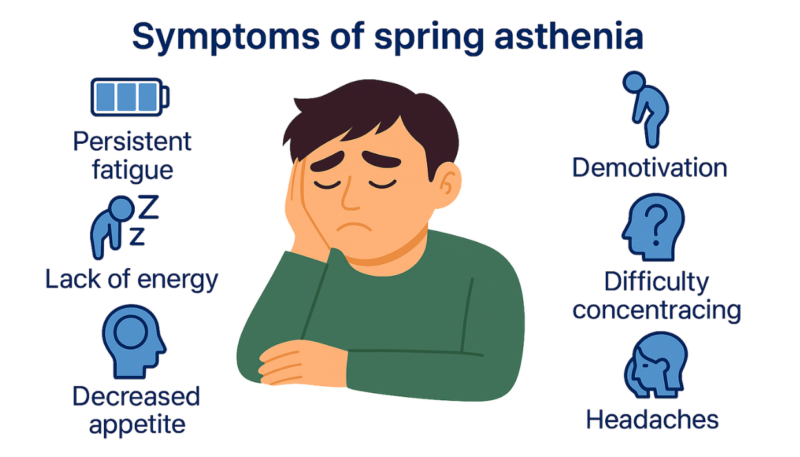
Spring asthenia is characterized by a generalized sense of fatigue, lack of energy, low motivation and a transient decline in vitality that coincides with the seasonal shift. Unlike pathological conditions, its symptoms are mild and short‑lived, yet they may still interfere with daily well‑being while the body adjusts to new environmental conditions.

Several mechanisms have been proposed to explain this phenomenon:

  • Increased daylight hours: Greater exposure to sunlight influences the circadian system and alters the secretion of hormones such as melatonin, which regulates sleep–wake cycles. This desynchronization may lead to nighttime insomnia and daytime sleepiness, contributing to the characteristic fatigue associated with spring asthenia (2).
  • Clock change: The transition to daylight saving time acts as a mild form of “internal jet lag”. Adjusting sleep and meal schedules can temporarily impair alertness and mood, leading to fatigue and irritability in susceptible individuals (3).
  • Rising temperature and atmospheric pressure: Warmer weather induces vasodilation and subtle changes in blood pressure, which may manifest as weakness or tiredness (4).
  • Increased environmental allergens: Seasonal allergies can cause nasal congestion, sleep disturbances and elevated histamine levels, factors linked to fatigue and general discomfort (5).

Altogether, these elements interact to produce hormonal and circadian fluctuations until the body fully adapts to the new seasonal conditions. Fortunately, spring asthenia tends to resolve spontaneously within one or two weeks, once the internal clock has resynchronized.

Most frequent Symptoms

Although intensity varies among individuals, spring asthenia typically presents with one or more of the following manifestations (6):

  • Persistent fatigue and excessive daytime sleepiness, even after a normal night’s rest.
  • Low energy levels and a diffuse sense of physical weakness.
  • Sleep disturbances: difficulty falling asleep, or conversely, sleeping longer yet feeling unrefreshed due to melatonin imbalance.
  • Reduced motivation, apathy and mildly depressed mood, often accompanied by irritability or low‑grade anxiety.
  • Poor concentration and slowed cognitive processing.
  • Recurrent headaches, alongside diffuse muscular or joint discomfort.
  • Altered appetite, either reduced or increased, as well as dizziness or mild digestive disturbances.
  • Occasionally, a temporary decrease in libido associated with fatigue and hormonal changes.

Symptoms are generally mild and reversible. Unlike chronic fatigue or depressive disorders, signs of spring asthenia are resolved spontaneously as homeostatic balance is restored. Nonetheless, its impact on well‑being and productivity often leads individuals to seek supportive measures during this period.

Nutraceutical Ingredients to mitigate Spring Asthenia​

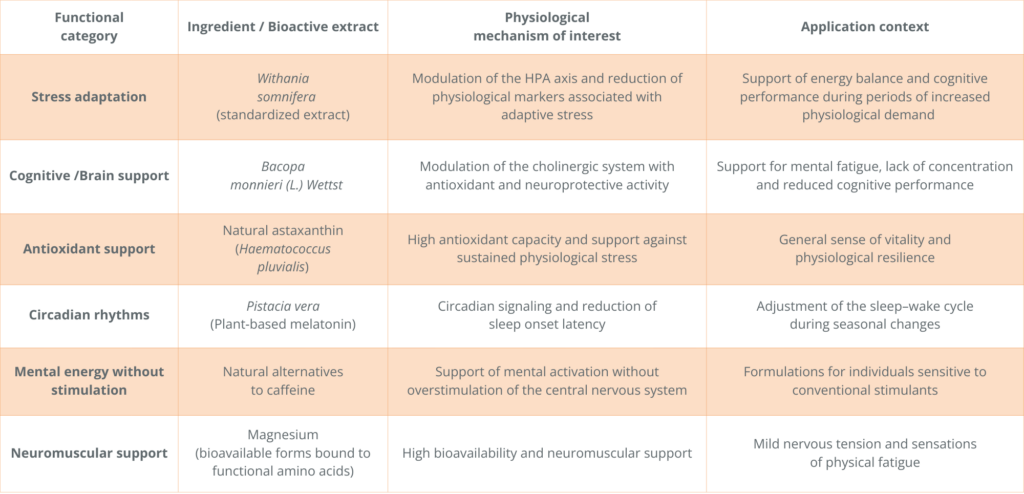
Within the nutraceutical field, a variety of natural compounds have been shown to help alleviate these symptoms safely by supporting
energy metabolism, mood regulation and sleep quality (7–11).

Conclusion

Although spring asthenia is a temporary condition, it can have a noticeable impact on well‑being and productivity during seasonal transitions. In response, the nutraceutical sector has developed natural ingredients supported by emerging scientific evidence. Adaptogens such as ashwagandha, sleep regulators like melatonin and several botanical extracts designed to enhance vitality and cognitive function are commonly used in formulations aimed at supporting the body’s adaptation to this seasonal process.

Are you looking for the right ingredients?

Subscribe to our newsletter…

…or find our ingredients in the following product portfolio!

References

  1. Roenneberg, T., Kantermann, T., Juda, M., Vetter, C., & Allebrandt, K. V. (2013). Light and the human circadian clock. Circadian clocks, 311-331.
  2. Czeisler, C. A., Kronauer, R. E., & Brown, E. N. (2016). Circadian physiology and human health. New England Journal of Medicine, 374(7), 683–693.
  3. Lahti, T. A., et al. (2020). Transition to daylight saving time affects sleep and circadian rhythms. Sleep Medicine Reviews, 52, 101303.
  4. Tsuchiya, M., et al. (2017). Temperature-induced vascular responses and fatigue. Physiological Reports, 5(12), e13245.
  5. Rosa, A., Rodrigues, F., & Silva, M. (2019). Allergic rhinitis and fatigue: mechanisms and clinical impact. Clinical Respiratory Journal, 13(9), 567–575.
  6. Morgenthaler, T. I., et al. (2017). Differential diagnosis of fatigue and somnolence. Sleep Medicine Clinics, 12(1), 1–12.
  7. Lopresti, A. L., et al. (2019). Effect of ashwagandha on stress and anxiety: A systematic review and meta-analysis. Medicine, 98(37), e17186.
  8. Pratte, M. A., et al. (2014). Ashwagandha for improving stress and sleep: A systematic review. Sleep Medicine Reviews, 18(4), 463–469.
  9. Wurtman, R. J., et al. (2016). Prolonged-release melatonin for insomnia. Sleep Medicine, 17, 148–155.
  10. Ferracioli Oliveira, T., et al. (2020). Effects of controlled-release melatonin on sleep architecture. Journal of Pineal Research, 68(1), e12630.