Sleep has evolved from being an important habit to becoming a core pillar of modern wellbeing. In a context marked by stress, hyperconnectivity and constant screen exposure, consumers are increasingly looking for solutions that not only help them fall asleep, but also restore circadian balance and overall health (1).
In this blog, we explain the basics of sleep and circadian rhythm, and outline the ingredients and solution concepts increasingly sought after by today’s consumers.
Human beings do not function in a linear way, but rather follow biological rhythms, internal cycles that regulate different physiological processes over time.
Among these, the most relevant are circadian rhythms, which correspond to cycles of approximately 24 hours, primarily synchronized with the light–dark cycle (2,3).
These rhythms affect multiple functions such as (2,3):

The market clearly reflects this shift. Consumers are moving away from fast-acting or pharmaceutical solutions and are increasingly seeking:
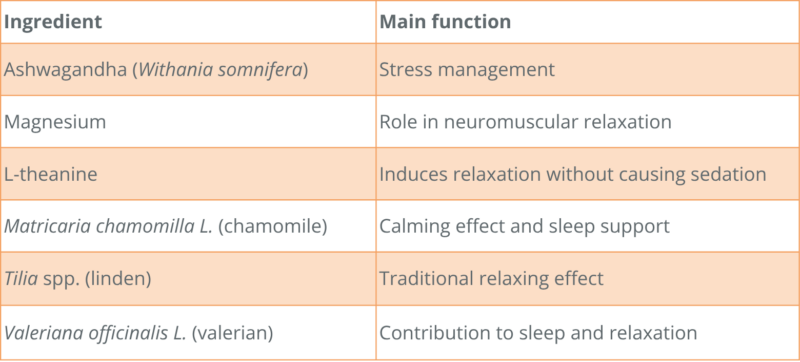
From a physiological perspective, several of these ingredients may act by modulating neurotransmitters involved in relaxation and sleep, such as GABA and serotonin, and by supporting sleep‑related hormones such as melatonin.
Among the most widely used ingredients are (1,6,7,8):
Another key driver is the integration of sleep into daily routines. Consumers are looking for products that fit into their lifestyle:
Supplements are no longer perceived as occasional aids, but rather as part of a ritual of disconnection and self-care, aligned with sleep hygiene practices and chronobiology (1,9).
While melatonin has historically dominated this category, the market is evolving towards more sophisticated alternatives and combinations.
Examples gaining traction include magnesium bisglycinate, vitamins, omega-3, probiotics and natural prolonged-release alternatives. This shift responds both to the demand for better tolerance and long-term use, and to a growing interest in more physiological approaches that support the regulation of the circadian system (9).
From a product development perspective, the sleep category continues to offer significant opportunities:
In this new context, the key is no longer just the ingredient itself, but the ability to build a narrative around biological rhythm and overall wellbeing.
Subscribe to our newsletter…
…or find our ingredients in the following product portfolio!
You are currently viewing a placeholder content from YouTube. To access the actual content, click the button below. Please note that doing so will share data with third-party providers.
More InformationYou are currently viewing a placeholder content from Hubspot Embedded Content. To access the actual content, click the button below. Please note that doing so will share data with third-party providers.
More InformationYou are currently viewing a placeholder content from HubSpot. To access the actual content, click the button below. Please note that doing so will share data with third-party providers.
More InformationYou are currently viewing a placeholder content from Hubspot Meetings. To access the actual content, click the button below. Please note that doing so will share data with third-party providers.
More Information