Women's Health
PMS & Cycle Basics – What every Woman should know
Female health is becoming an increasingly important focus within the nutraceutical sector. Even though millions of women experience physical and emotional changes related to their menstrual cycle every month, there is still limited understanding of what actually happens during each phase of the cycle and which symptoms are part of normal physiology and which are not (1,2).
Understanding the menstrual cycle is the first step towards improving women’s health. Beyond menstruation itself, the cycle is a complex biological process regulated by the hypothalamic–pituitary–gonadal axis, in which hormonal fluctuations influence multiple functions throughout the body, including mood, energy levels, appetite, sleep, and even physical and cognitive performance (1–5).
The Four Phases of the Menstrual Cycle
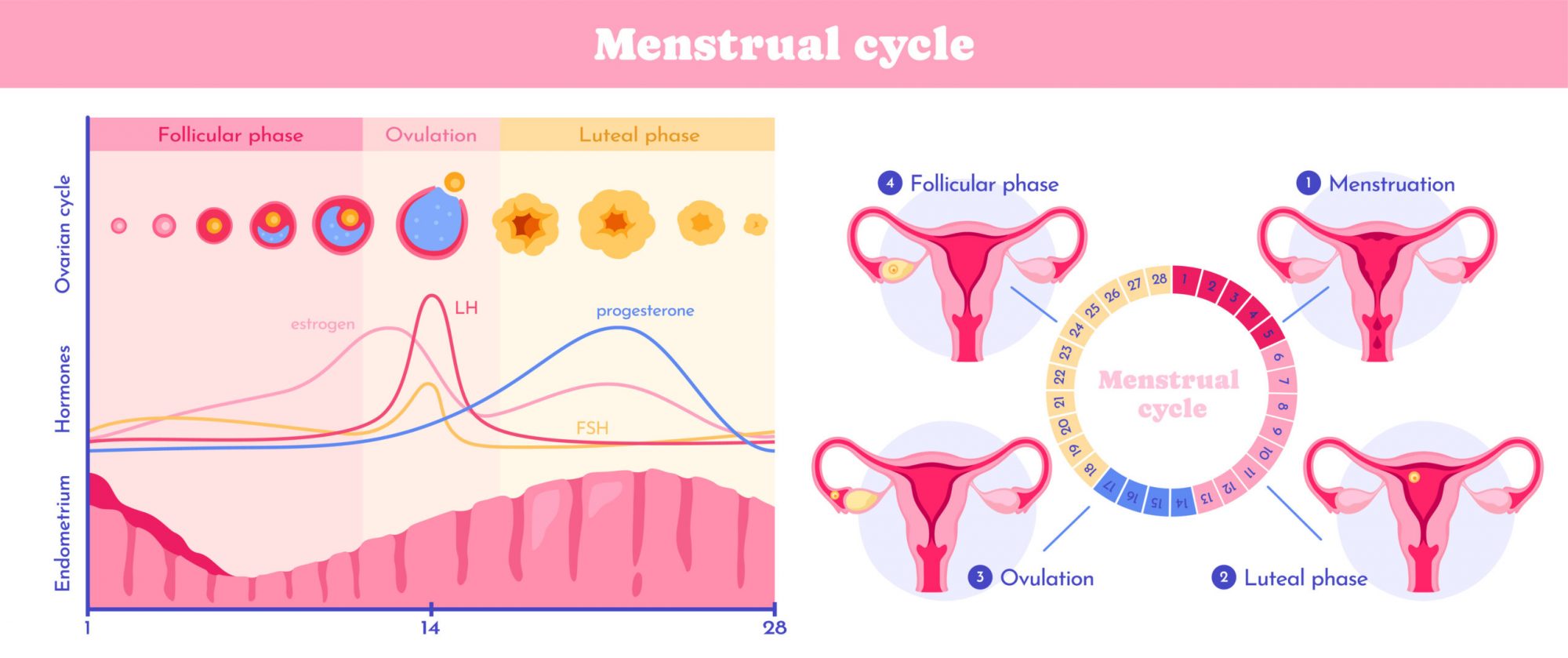
Although cycle length can vary from woman to woman, a typical menstrual cycle is generally divided into four main phases.
1. Menstrual Phase
Menstruation marks the beginning of a new cycle. During this phase, the uterine lining is shed as estrogen and progesterone levels decline. Some women may experience fatigue, abdominal discomfort, or reduced energy levels during this stage (1,2).
2. Follicular Phase
At the same time as menstruation, ovarian follicles begin to mature. Estrogen levels gradually increase, and many women report improvements in focus, motivation, and vitalityas this phase progresses (1–4).
3. Ovulation
Around the middle of the cycle, the egg is releasedin response to a surge in luteinizing hormone (LH). This stage is typically associated with high estrogen levels and, in some women, with an increased sense of well-being and energy (1,2).
4. Luteal Phase
Following ovulation, progesteroneproduction increases. If fertilization does not occur, hormone levels gradually decline before the next menstrual period. It is during this phase that most symptoms associated with premenstrual syndrome (PMS) appear (1,2).
What Exactly Is Premenstrual Syndrome?
Premenstrual syndrome (PMS) is defined as the recurrent occurrence of physical, emotional and behavioural symptomsduring the luteal phaseof the menstrual cycle that improve or disappear once menstruation begins. It is estimated that approximately half of women of reproductive age experience some degree of premenstrual symptoms, although severity varies considerably between individuals (5,6).
Common symptoms include abdominal bloating, breast tenderness, headache, fatigue, changes in appetite, irritability, anxiety, mood disturbances and difficulty concentrating. Today, PMS is not thought to be caused simply by high or low hormone levels, but rather by an individual’s increased sensitivityto the normal hormonal fluctuationsthat occur throughout the menstrual cycle. Several neurobiological pathways involving serotonin, GABA and allopregnanolone are believed to play a role in this process (6,7).
This understanding has significantly changed the way PMS is approached. Rather than attempting to correct the menstrual cycle, current strategies focus on supporting the body’s ability to adapt to the physiological changes that occur throughout the month.

Nutrition and Lifestyle: The Foundation of Menstrual Well-Being
Before considering any nutritional intervention, it is important to remember that healthy lifestyle habits remain the cornerstone of menstrual health support.
Several studies have suggested that diets rich in fruits, vegetables, legumes, whole grains and calcium-containing foods are associated with reduced severity of premenstrual symptoms. Conversely, a high intake of refined sugars, alcohol, salt and ultra-processed foods may contribute to more severe symptoms, although further research is needed before definitive recommendations can be made (5,8).
Regular physical activity also appears to play a beneficial role. A meta-analysis of clinical trials found that exercise may help reduce physical, psychological, and behavioural symptoms associated with PMS, highlighting the importance of an integrated approach combining nutrition, movement, and menstrual cycle education (9).
In addition, tracking the menstrual cycle through a diary or mobile application can help identify patterns and distinguish normal cyclical changes from symptoms that may require professional support.
Nutraceutical Ingredients of Interest for Women's Health
Once the foundations of nutrition and lifestyle have been established, certain ingredients may complement a strategy aimed at supporting female well-being.
Chasteberry (Vitex agnus-castus)
Chasteberry is probably the most extensively studied botanical ingredient in relation to PMS. Several systematic reviews and meta-analyses have demonstrated positive effects on symptoms such as irritability, breast tenderness, general discomfort and mood changes. Although study designs and preparations vary considerably, Vitex agnus-castusremains one of the best-supported botanicals for premenstrual support (10,11).
SRI-81® Shatavari
Women’s health extends far beyond PMS. In this context, Shatavari (Asparagus racemosus) has attracted increasing scientific interest due to its potential role in supporting overall female well-being. Traditionally used in Ayurvedic medicine, this botanical has been investigated for its potential effects on hormonal balance, quality of life and emotional well-being in women. Standardized extracts such as SRI-81® represent a new generation of ingredients designed to support women through different stagesof life from a broader and more holistic perspective (12,13).
Ginfort®
Ginger (Zingiber officinale) is another extensively researched ingredient in the field of women’s health. Available scientific evidence has linked ginger primarily to menstrual comfort and the relief of primary dysmenorrhea.
Several systematic reviews and meta-analyses suggest that ginger supplementation may help reduce the severity of menstrual discomfort when compared with placebo, making it an ingredient of considerable interest for formulations targeting female well-being. Furthermore, standardized extracts such as Ginfort® offer new opportunities for developing evidence-based solutions that address current consumer needs (14,15).
Conclusion
Our understanding of women’s health continues to evolve. Today, we know that understanding the menstrual cycle is just as important as managing the symptoms associated with its different phases.
For the nutraceutical industry, this represents an opportunity to develop solutions that combine education, cycle awareness, healthy lifestyle practices and science-backed ingredients. In this context, ingredients such as Vitex agnus-castus, SRI-81® Shatavari and Ginfort® may form part of a comprehensive strategy designed to support women throughout the entire menstrual cycle, promoting well-being, knowledge and an improved quality of life.
Are you looking for the right ingredients?
Subscribe to our newsletter…
…or find our ingredients in the following product portfolio!
References
- Itriyeva, K. (2022). The normal menstrual cycle. Current Problems in Pediatric and Adolescent Health Care, 52(5), 101183.
- Reed, B. G., & Carr, B. R. (2018). The Normal Menstrual Cycle and the Control of Ovulation. Endotext.
- McNulty, K. L., Elliott-Sale, K. J., Dolan, E., et al. (2020). The Effects of Menstrual Cycle Phase on Exercise Performance in Eumenorrheic Women: A Systematic Review and Meta-analysis. Sports Medicine, 50(10), 1813–1827.
- Elliott-Sale, K. J., Minahan, C. L., de Jonge, X. A. K. J., et al. (2021). Methodological Considerations for Studies in Sport and Exercise Science with Women as Participants. Sports Medicine, 51(5), 843–861.
- Robinson, J., Ferreira, A., Iacovou, M., & Kellow, N. J. (2025). Effect of nutritional interventions on the psychological symptoms of premenstrual syndrome in women of reproductive age: a systematic review of randomized controlled trials. Nutrition Reviews, 83(2), 280–306.
- Yonkers, K. A., & Simoni, M. K. (2018). Premenstrual Disorders. American Journal of Obstetrics and Gynecology, 218(1), 68–74.
- Bäckström, T., Haage, D., Löfgren, M., et al. (2014). Paradoxical effects of GABA-A modulators may explain sex steroid induced negative mood symptoms in some persons. Neuroscience, 279, 65–73.
- Oboza, P., Ogarek, N., Wójtowicz, M., et al. (2024). Relationships between premenstrual syndrome (PMS) and diet composition, dietary patterns and eating behaviors. Nutrients, 16(12), 1911.
- Pearce, E., Jolly, K., Jones, L. L., Matthewman, G., Zanganeh, M., & Daley, A. (2020). Exercise for premenstrual syndrome: a systematic review and meta-analysis of randomised controlled trials. BJGP Open, 4(3).
- Verkaik, S., Kamperman, A. M., van Westrhenen, R., & Schulte, P. F. J. (2017). The treatment of premenstrual syndrome with preparations of Vitex agnus-castus: a systematic review and meta-analysis. American Journal of Obstetrics and Gynecology, 217(2), 150–166.
- Sánchez-Prieto, M., Losa-Puig, H., Domínguez-Osorio, N. A., et al. (2023). El alivio natural: Sauzgatillo (Vitex agnus-castus) para el síndrome premenstrual y la dismenorrea. Revista Chilena de Obstetricia y Ginecología, 88(2), 121–125.
- Sharma, P. V., & Bhatnagar, M. (2011). Asparagus racemosus (Shatavari): A versatile female tonic. International Journal of Pharmaceutical Sciences Review and Research, 8(1), 74–79.
- Clinical studies and technical dossier on standardized Asparagus racemosusextract (SRI-81®).
- Daily, J. W., Zhang, X., Kim, D. S., & Park, S. (2015). Efficacy of Ginger for Alleviating the Symptoms of Primary Dysmenorrhea: A Systematic Review and Meta-analysis of Randomized Clinical Trials. Pain Medicine, 16(12), 2243–2255.
- Chen, C. X., Barrett, B., Kwekkeboom, K. L., et al. (2022). Ginger (Zingiber officinale) for Primary Dysmenorrhea: An Updated Systematic Review and Meta-analysis. Journal of Alternative and Complementary Medicine, 28(4), 285–295.